
By Diwakar Sinha
A few months ago, I wrote about why 2026 could be shaping up to be a strong year for recapitalizations and healthcare M&A. The story was straightforward: capital was becoming more available, lenders were growing more competitive, and buyers were finding it easier to finance acquisitions.
Since then, I’ve continued watching one metric closely: SOFR.
Not because SOFR determines the value of your practice, but because it influences the cost of capital, and capital has a direct impact on healthcare transaction activity.
If you look at the chart, the story becomes clear:
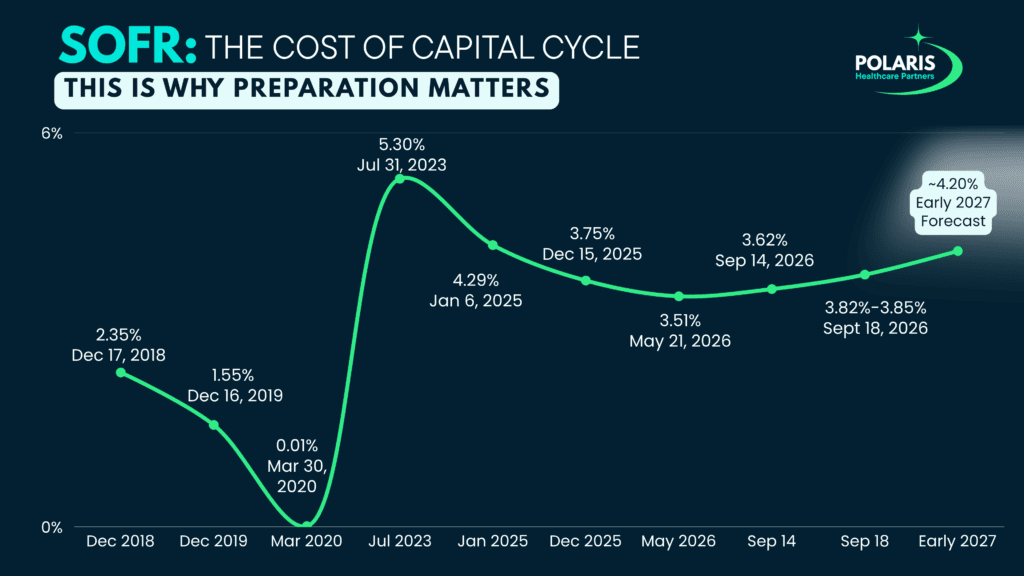
In December 2018, SOFR was 2.35%.
By March 2020, it had fallen to essentially zero. That period helped fuel one of the most aggressive capital deployment environments healthcare services has ever seen. Buyers had access to inexpensive debt; valuations expanded, and M&A activity accelerated.
Then came the reversal.
By July 2023, SOFR had climbed to 5.30%. Many sponsor-backed organizations felt the impact through higher interest expense, tighter cash flow, and more challenging recapitalization conditions.
As rates began easing in 2025 and into 2026, markets responded. Capital became more accessible again; financing conditions improved, and buyers returned with renewed interest.
But over the last few months, we’ve seen a notable shift:
- May 21, 2026: 3.51%
- September 14, 2026: 3.62%
- September 18, 2026: approximately 3.82%-3.85%
- Early 2027 forecasts: approaching 4.2%
Does that mean valuations are about to fall? No.
But it should remind owners of something important:
Markets change faster than most businesses do.
Too many healthcare practice owners focus on timing the market. The most successful ones focus on preparing for it.
When market conditions tighten, buyers become more selective. The businesses that continue to command premium valuations are typically the ones that invested in leadership, provider retention, associate development, infrastructure, scalability, and operational performance long before they ever considered a transaction.
In other words, they built a business that could succeed in any capital market environment.
That’s the lesson I take from this chart. Not that rates are going higher.
Not that owners should rush to market. But that preparation matters.
Whether SOFR is 3%, 4%, or 5%, great businesses will always attract interest. The difference is that in a tighter market, only the best businesses attract premium valuations.
At Polaris, we’ve always believed the goal isn’t to chase the market.
The goal is to think ahead of it. Build the right business. Create the right strategic positioning. Prepare before conditions change.
Because the owners who achieve the best outcomes are rarely reacting to the market.
They’re already ready when the market gets there.
That is the Polaris Way.
Stay Connected
- Want to learn how Polaris can help? Complete our contact form and we’ll be in touch: https://www.polarishealthcarepartners.com/contact/